The holidays are one of the most popular times of year for cosmetic surgery. It makes sense: many people have time off work, and the slower pace can feel like the right moment to focus on yourself. But the season also brings travel, gatherings, big meals, and a long to-do list.
With a little planning before your surgery date, you can enjoy the season and give your body the rest it needs. Here's what to think about ahead of time.
Your surgeon knows your body and your procedure best. Always follow their instructions on activity, travel, diet, and garments.
Before surgery: questions to ask your surgeon
Your pre-op appointment is the best time to get clear answers. Bring a list. Here are some questions patients often find helpful:
- Which compression garment do you recommend, and for how long?
- When will I switch from Stage 1 to Stage 2?
- Should I use lipo foam, an ab board, or a lumbar board under my garment?
- When can I travel, and is a car ride or flight okay?
- When can I go back to normal activities, like lifting, cooking, or decorating?
- Are there foods or drinks I should limit during recovery?
- Who do I call if I have a concern over a holiday weekend?
That last question is important. Many offices have shorter hours over the holidays, so it's good to know your contact plan ahead of time.
Order your garments early
Shipping often takes longer in November and December. Order your garments well before your surgery date so you have time to try them on, check the fit, and exchange a size if needed.
What to look for in a compression garment
- The right stage. Stage 1 garments usually have zippers or hook-and-eye closures, so they're easier to put on when moving is hard. Stage 2 garments are typically pull-on styles for later in recovery. Our Stage 1-2-3 Recovery Explained guide covers this in detail.
- The right style for your procedure. For example, BBL patients usually need an open-buttock design, while tummy tuck patients often need full coverage of the abdomen.
- Comfort for all-day wear. You'll wear your garment for long stretches. Our garments are latex free, have no lace, and use fabric with an antimicrobial treatment.
- The right size. Measure yourself and use the size chart, rather than going by your usual clothing size.
- A spare. Having two garments means you can wear one while the other is washed and dried.
If your surgery falls near Black Friday, our Recovery Ready offer runs November 25 to 29, with 15% off orders of $150+, 20% off $200+, and 25% off $300+ on compression garments. On Cyber Monday, November 30, compression garments are 30% off.
Set up your recovery space
Get your space ready before surgery, so you can come home and rest.
- Choose one main spot, like the couch or bed, and keep everything you need within reach.
- Gather the basics: water bottle with a straw, phone charger with a long cable, pillows, a blanket, and any medications your surgeon prescribed.
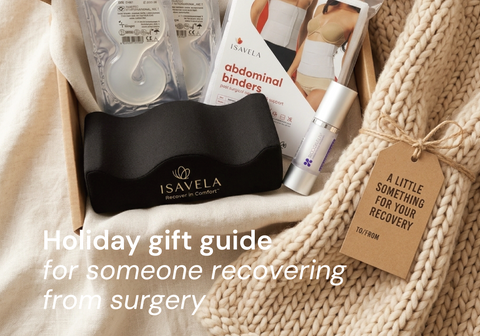
- Add recovery essentials your surgeon recommends, like a BBL pillow, lipo foam, or an ab board. You'll find them in our recovery essentials collection.
- Clear walkways of cords, rugs, and holiday decorations to reduce the risk of tripping.
Plan the holidays around your recovery
Decorate and wrap before surgery
Lifting boxes, climbing ladders, and reaching overhead are often off-limits for a while after surgery. Put up decorations and wrap gifts before your date, or ask family to take it on.
Make a meal plan
Cook and freeze a few simple meals ahead of time, or line up a meal delivery service. If you're attending holiday dinners, ask your surgeon about diet. Some patients notice that salty foods make them feel more swollen, and many surgeons have guidance on alcohol during recovery.
Think about travel
If you're planning to travel for the holidays, talk to your surgeon before booking anything. Long car rides and flights can be hard in early recovery. Your surgeon may have specific rules about when travel is okay.
Dress for comfort
Your garment will be under your clothes for most of the season. Plan easy outfits ahead of time: wrap dresses, wide-leg pants, soft cardigans, and button-front tops. Slip-on shoes save you from bending over. Layers help in cold weather and are easy to adjust.
Set gentle boundaries
It's okay to skip a party, leave early, or host a smaller gathering. Let family and friends know ahead of time that you'll need to rest. Ask for help with the things that matter most, and let the rest go.
Your pre-surgery holiday checklist
- Pre-op questions answered by your surgeon
- Garments ordered, tried on, and sized correctly
- Recovery essentials ready
- Recovery space set up
- Meals planned or prepped
- Decorations up and gifts wrapped
- Rides to post-op appointments arranged
- Holiday plans adjusted around your recovery
Recovery is part of the journey, and it deserves your attention. A calm, well-planned season can be a real act of self-care.
FAQ
Is it a good idea to have surgery over the holidays?
Many people choose the holidays because they have time off work. It can work well with planning. Talk with your surgeon about your schedule, travel plans, and how much rest you'll need.
When should I order my compression garment?
Order early, ideally a few weeks before surgery. Holiday shipping can take longer, and ordering early gives you time to check the fit and exchange a size if needed.
How many compression garments do I need?
Many patients find two garments helpful, so one can be worn while the other is washed. You may also need a separate Stage 2 garment later, and your size may change as swelling goes down.
Can I travel for the holidays after surgery?
It depends on your procedure and your surgeon. Some surgeons recommend waiting a certain amount of time before long car rides or flights. Ask before you book.
Can I drink alcohol at holiday parties during recovery?
Ask your surgeon. Many surgeons have specific guidance on alcohol, especially while you're taking medications or still healing.